
 Facebook
 X
X LinkedIn
 Forward
Recorded Webinar: Mānuka Mastery for Nutrition Professionals
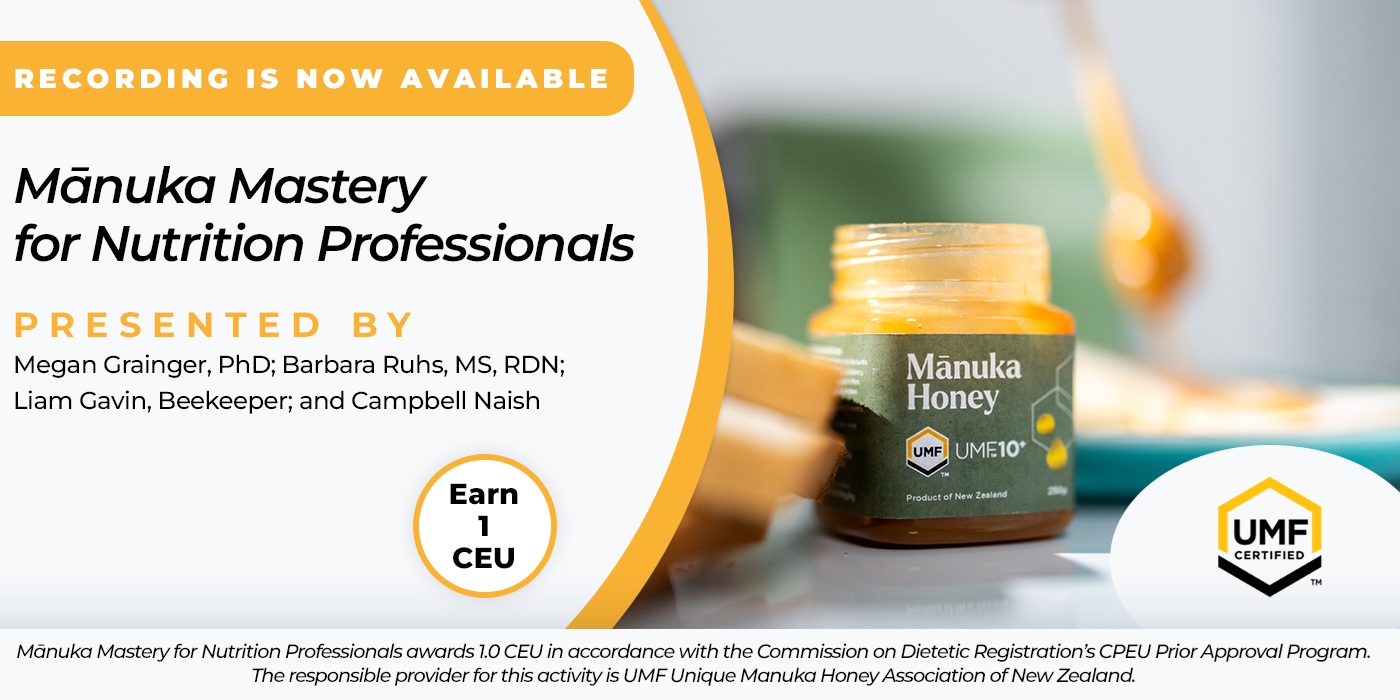
This continuing education course explores New Zealand Mānuka honey, covering its origin, history, and decades of scientific research on the health effects, including its potential impact on gastrointestinal, respiratory, and metabolic health, and antimicrobial, anti-inflammatory, antioxidant, and wound healing properties. It also summarizes the mechanisms of action of the various compounds found in Mānuka honey and evaluates the practical application of Mānuka honey as a dietary supplement and in clinical care.
Learning Objectives
After completing this activity, nutrition professionals will better be able to:
- Understand the history of Mānuka honey, how it’s produced, and how to ensure Mānuka honey is authentic, pure, potent and fresh.
- Describe the chemical composition and bioactive compounds of Mānuka honey that contribute to its health effects.
- Evaluate current evidence regarding Mānuka honey’s health benefits, including antimicrobial, anti-inflammatory, antioxidant, and wound-healing properties.
- Assess the role of Mānuka honey in gastrointestinal, respiratory, and metabolic health, and apply evidence-based recommendations for incorporating Mānuka honey into the diet.
Additional Information
Course summary
- 1.00 CDR
 Dr. Megan Grainger, Director of the Honey Research Unit at the University of Waikato, New Zealand, began her scientific career under the mentorship of Mānuka honey research founder, Dr. Peter Molan, and as part of Professor Merilyn Manley-Harris’ Waikato University team that first identified methylglyoxal (MGO) in Mānuka honey. During her PhD, she developed the first predictive model for the conversion of dihydroxyacetone (DHA) to MGO—a forecasting tool now widely used across the honey industry. Her current research focuses on Mānuka honey chemistry, including authenticity testing, phenolic composition, and environmental impacts on honey quality. She also investigates heavy metal uptake in bees to assess potential risks to colony health.
Leading a growing research team, Megan is dedicated to producing impactful, collaborative science that strengthens the apiculture industry and makes research accessible to the global community.
 Barbara Ruhs, MS, RDN is a leading registered dietitian nutritionist and owner of MarketRD.com, a nutrition marketing and communications consultancy that partners with food brands, commodity boards, and retailers to advance science-based nutrition and wellness.
Barbara’s work helps brands build trust, increase visibility, and authentically connect with consumers through evidence-based storytelling and integrated media strategy. She holds a master’s degree in nutrition from Boston University and a bachelor’s degree in Nutritional Sciences from Cornell University.
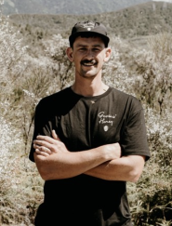 Liam Gavin is a 4th-generation commercial beekeeper, carrying on the legacy of his family business. With a lifelong passion for bees, he has dedicated his career to working with these incredible creatures. Liam takes great pride in producing high-grade Mānuka honey that is free from impurities. His extensive knowledge of Mānuka honey allows him to ensure compliance with the highest market standards for export worldwide.
 Campbell Naish, is Head of Strategy and Partnerships at the Unique Mānuka Factor (UMF) Honey Association. He has more than 25 years of global marketing experience and has worked extensively with businesses in the primary sector, the natural products and nutraceuticals sector, as well as establishing a successful international market development consultancy. Campbell also has extensive experience working with industry groups and government body organizations, building evidence-based education programs supporting the food and health categories.
Disclosures:
Barbara Ruhs, MS, RDN, has the following relevant disclosures to report: she is a consultant to UMF Unique Mānuka Honey Association of New Zealand.
Campbell Naish has the following relevant disclosures to report: he is an employee of UMF Unique Mānuka Honey Association of New Zealand.
Mānuka Mastery for Nutrition Professionals awards 1.0 CEU in accordance with the Commission on Dietetic Registration’s CPEU Prior Approval Program.
The responsible provider for this activity is UMF Unique Mānuka Honey Association of New Zealand.
Funding from non-CPE revenue for CPE planning, development, review, and/or presentation has been provided by UMF Unique Mānuka Honey Association of New Zealand.
Mānuka Mastery for Nutrition Professionals awards 1.0 CEU in accordance with the Commission on Dietetic Registration’s CPEU Prior Approval Program.
The responsible provider for this activity is UMF Unique Manuka Honey Association of New Zealand.
Funding from non-CPE revenue for CPE planning, development, review, and/or presentation has been provided by UMF Unique Manuka Honey Association of New Zealand.
Available Credit
- 1.00 CDR
Price
Required Hardware/software
Ensure your browser's cookies are enabled in order for the video software to function properly.